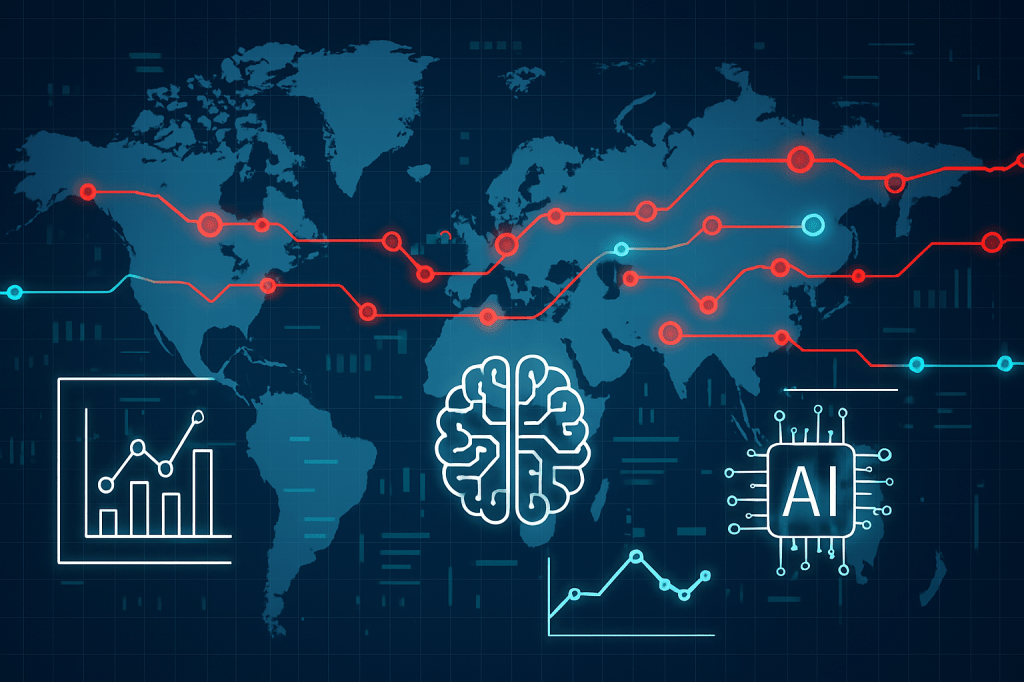
April 2nd Shockwave: Tariffs on 100+ Countries
On April 2nd, the White House announced sweeping new tariffs targeting over 100 countries. Global supply chains trembled. Industries scrambled to reprice, reroute, and renegotiate.
From factories in Asia to logistics hubs in Europe, companies now face escalating costs, retaliatory threats, and strategic uncertainty. But amidst the economic fallout, one force is helping businesses stay ahead of the chaos:
AI: Your Smartest Ally in Trade Wars 2.0
This isn’t just a digital upgrade. In Trade Wars 2.0, AI is the new command center—an intelligent platform that empowers companies and governments to anticipate change, simulate outcomes, and execute faster decisions.
Let’s break down six AI-driven strategies that are turning disruption into opportunity.
1. Real-Time Trade Intelligence & Simulation
- Forecast sector-wise impacts before new tariffs hit.
- Anticipate retaliatory responses based on historical patterns.
- Simulate “what-if” scenarios for supply, revenue, and pricing decisions.
Trade forecasting is no longer reactive—it’s predictive and dynamic.
2. Dynamic Supply Chain Optimization
- Dynamically reroute shipments to avoid tariff-heavy regions.
- Predict and preempt bottlenecks caused by policy shifts.
- Optimize sourcing by weighing cost, lead time, quality, and tariff exposure.
Static supply chains are obsolete. AI builds living, self-correcting networks.
3. Strategic Pricing & Cost Intelligence
- Adjust prices in real time across markets to protect margins.
- Uncover hidden savings through deep cost analytics.
- Forecast customer response to price changes under new tariff regimes.
Pricing strategy becomes a proactive lever—not a desperate reaction.
4. Policy Advisory & Negotiation Intelligence
- Analyze sentiment across public statements and media coverage.
- Identify strategic pressure points using trade interdependency mapping.
- Provide real-time insights to strengthen negotiation outcomes.
AI turns data into diplomatic advantage.
5. Risk Monitoring & Early Warning Systems
- Detect early signs of protectionist policies in draft laws and social buzz.
- Flag irregularities in customs or commodity flows.
- Alert stakeholders before disruptions unfold.
This is your 24/7 global economic radar.
6. Intelligent Decision Support for CxOs
- Quantify exposure to current and future tariffs.
- Simulate high-impact decisions like supplier shifts or regional exits.
- Link trade insights directly to financial and operational KPIs.
AI supports faster, smarter, and more proactive leadership.
Conclusion: From Chaos to Clarity
Trade Wars 2.0 is not just about tariffs—it’s about transformation. The winners will not be those who guess better, but those who decide faster, pivot smarter, and see further.
AI is no longer optional. It’s the new operating system for trade strategy.

 THE AI CHRONICLE
Leave a comment