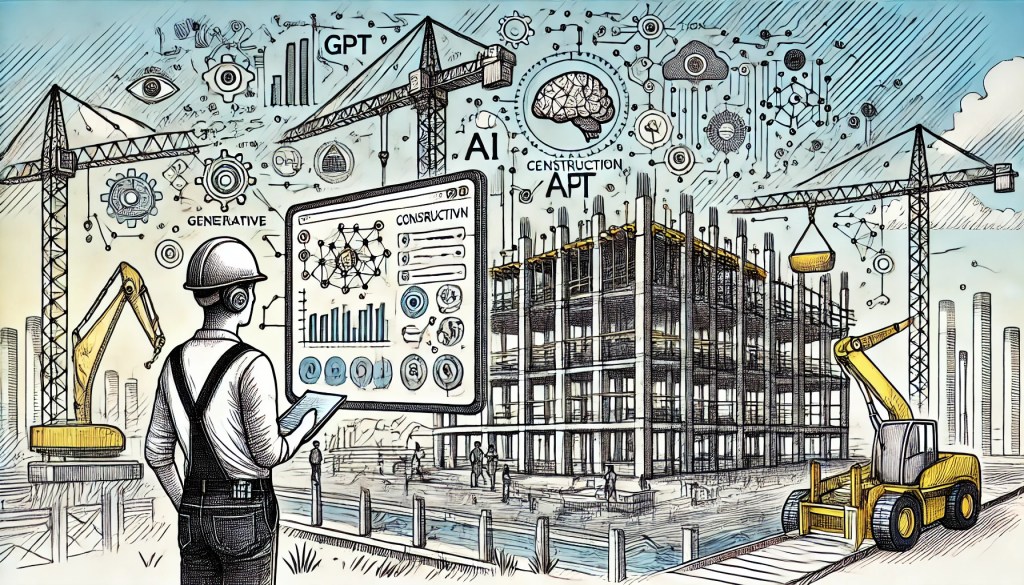
The construction industry stands on the brink of disruption. As digital transformation accelerates across sectors, Generative AI—specifically in the form of Construction GPT—is redefining how infrastructure is designed, built, and maintained. This convergence of AI with Architecture, Engineering, and Construction (AEC) know-how is not just evolutionary—it’s revolutionary. Based on insights from Prashnna Ghimire et al., this article unpacks why Construction GPT is the next big thing for CxOs seeking resilience, productivity, and innovation.
What is Construction GPT? Construction GPT refers to the application of Large Language Models (LLMs) such as GPT, PaLM, and LLaMA to automate content generation, streamline workflows, and support decision-making in the construction domain. From drafting safety reports to generating design alternatives and optimizing schedules, Construction GPT acts as a smart assistant across the value chain.
Why It Matters to CxOs Today’s construction leaders face mounting pressures—cost escalations, skilled labor shortages, and tighter timelines. Construction GPT responds with:
- Rapid data extraction and interpretation
- AI-assisted collaboration and communication
- Reduced manual paperwork and errors
Where It’s Already Making Waves Industry giants are proving the potential:
- Turner Construction uses GenAI to automate RFI summaries and incident logging.
- Laing O’Rourke leverages LLMs in concept design development.
- AECOM accelerates bid evaluation through AI.
- Skanska explores generative design in infrastructure planning.
- Autodesk embeds conversational AI into AEC software workflows.
These real-world applications signal a larger trend—one where AI isn’t a nice-to-have but a core capability.
Applications Across the Lifecycle Construction GPT is enhancing:
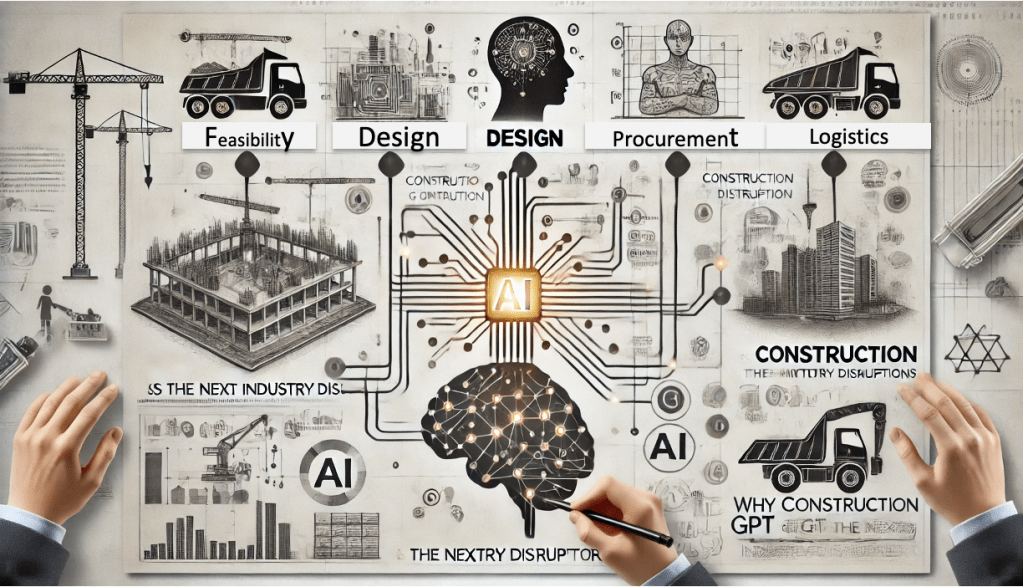
- Feasibility: Automated reports, site analysis
- Design: AI-generated concepts, compliance documentation
- Procurement: Vendor assessment, contract drafting
- Construction: Real-time progress tracking, translation, safety training
- Operations: Predictive maintenance, digital twin support, chatbot helpdesks
Challenges to Address Despite its promise, Construction GPT comes with considerations:
- Accuracy: Outputs need validation to avoid errors
- Customization: Models require domain-specific fine-tuning
- Cost: Infrastructure and training investments are essential
- Governance: Data privacy, IP rights, and AI ethics must be enforced
The CxO Playbook: How to Lead the Shift
- Identify quick wins (e.g., document generation, chatbot Q&A)
- Partner for fine-tuning using internal data and BIM models
- Deploy with governance and human-in-the-loop validation
Final Word Construction GPT represents a pivotal moment. For CxOs, it’s not just about adopting new tech—it’s about reshaping business models and unlocking untapped value. AI is no longer optional. The construction firms that harness Construction GPT today will build the competitive edge of tomorrow.
 THE AI CHRONICLE
Leave a comment