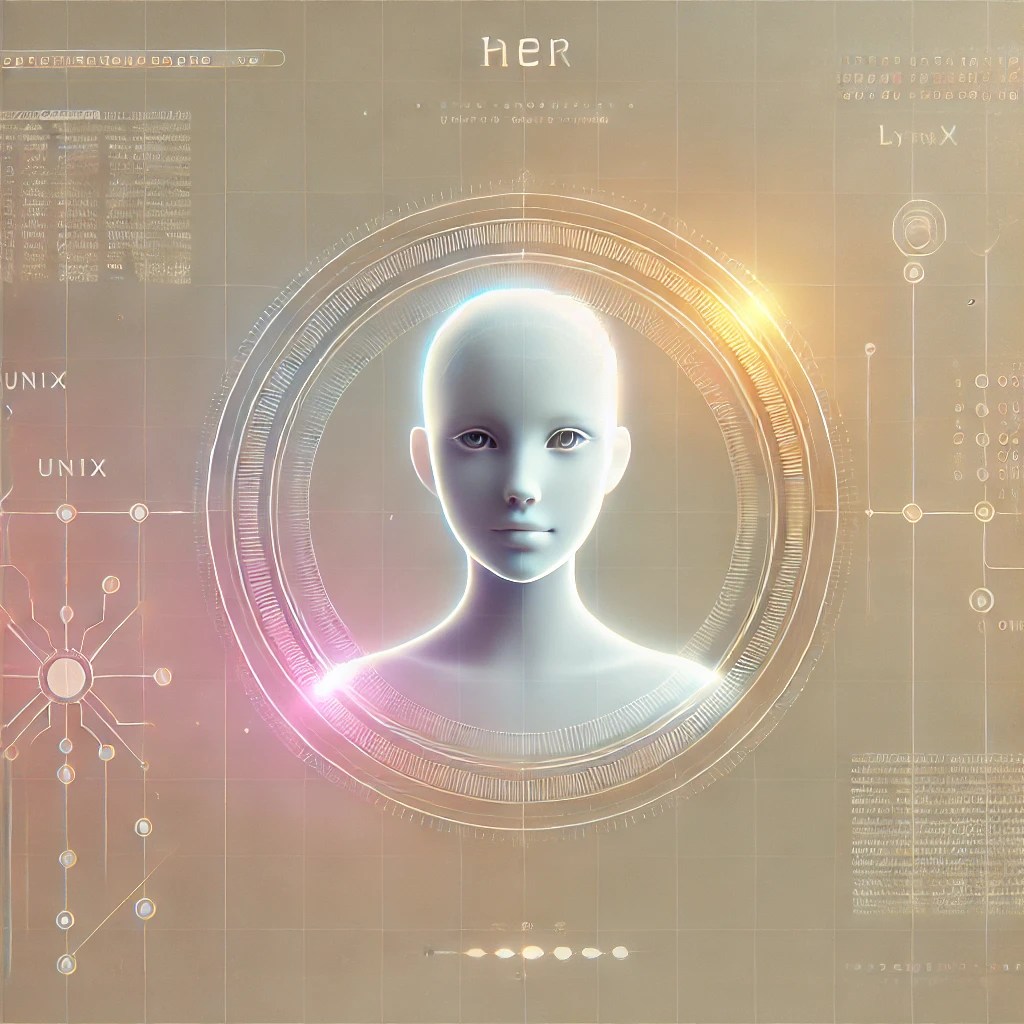
We’ve heard it before—‘Data is the new oil,’ fueling digital transformation, and ‘AI is the new electricity,’ powering innovation across industries. Now, a new paradigm emerges: ‘AI Agents are the new Operating System.’ Just as operating systems once revolutionized how we interact with computers, AI agents are now redefining our digital experience—intelligently orchestrating applications, automating workflows, and enabling seamless interactions.
Recently, I watched the movie Her, where an AI assistant evolved from a simple tool into a deeply intuitive, context-aware companion. While still fictional, we are moving closer to a world where AI agents act not just as software, but as intelligent, personalized operating systems shaping our daily lives.
The Rise of AI Agents
AI agents are no longer just a futuristic concept—they are rapidly becoming an integral part of our digital lives. Unlike traditional software, which relies on predefined commands, AI agents operate dynamically, learning from interactions and making proactive decisions. Much like the AI assistant in Her, today’s AI agents—ranging from ChatGPT, Gemini and Claude to enterprise automation bots—are evolving beyond simple task execution. They now function as intelligent orchestrators, capable of understanding context, automating complex workflows, and personalizing interactions at an unprecedented scale.
Why AI Agents Are the New OS
Traditional operating systems served as the backbone of computing, enabling users to interact with applications through structured interfaces. But in today’s world, where complexity and automation are key, AI agents are emerging as the new operating system—one that is intelligent, adaptive, and proactive.
Instead of relying on clicks, menus, and manual inputs, AI agents orchestrate digital interactions seamlessly across applications and platforms. They:
- Automate workflows by handling complex, multi-step processes.
- Understand context to deliver personalized and predictive assistance.
- Interface with multiple applications without requiring direct user intervention.
- Learn and adapt over time, improving efficiency and user experience.
This shift represents more than just an upgrade—it’s a fundamental change in how we interact with technology. AI agents are no longer just tools; they are becoming the interface itself, redefining our digital experiences in ways that were once only imagined in sci-fi.
The Technology Powering AI Agents
The rise of AI agents is fuelled by advancements in Large Language Models (LLMs) like GPT-4, Gemini and Claude, agentic architectures, and reinforcement learning. These technologies enable AI agents to engage in dynamic conversations, access APIs, and autonomously complete tasks across multiple domains.
Unlike traditional software, which follows static rules, AI agents leverage real-time learning and contextual awareness to interact intelligently with users and systems. They integrate seamlessly across enterprise IT, customer service, healthcare, and energy management, creating a new paradigm of digital efficiency and automation.
Challenges and the Road Ahead
While the promise of AI agents as the new operating system is compelling, their evolution comes with significant challenges. As these intelligent systems become more integrated into our digital lives, issues such as ethical deployment, data privacy, and security take center stage. Ensuring transparency in decision-making, mitigating biases in algorithms, and protecting sensitive information are critical hurdles we must overcome. Additionally, seamlessly integrating AI agents across diverse platforms—while preserving human oversight—remains a complex technical and operational challenge.
Looking ahead, responsible AI development and robust regulatory frameworks will be key to unlocking the full potential of AI agents. With continued collaboration among technologists, policymakers, and industry leaders, we can transform these challenges into opportunities, paving the way for a future where AI agents not only enhance productivity but also build trust in our digital ecosystems.


 THE AI CHRONICLE
Leave a comment